Over 10 years after CELLspace closed, the huge metal mural from the art warehouse’s facade is celebrated with a gallery at The Midway
By Allie Skalnik, for MissionLocal (Aug. 26, 2025)
When an artists’ warehouse in the Mission closed its doors for the last time in 2012, almost everything was accounted for.
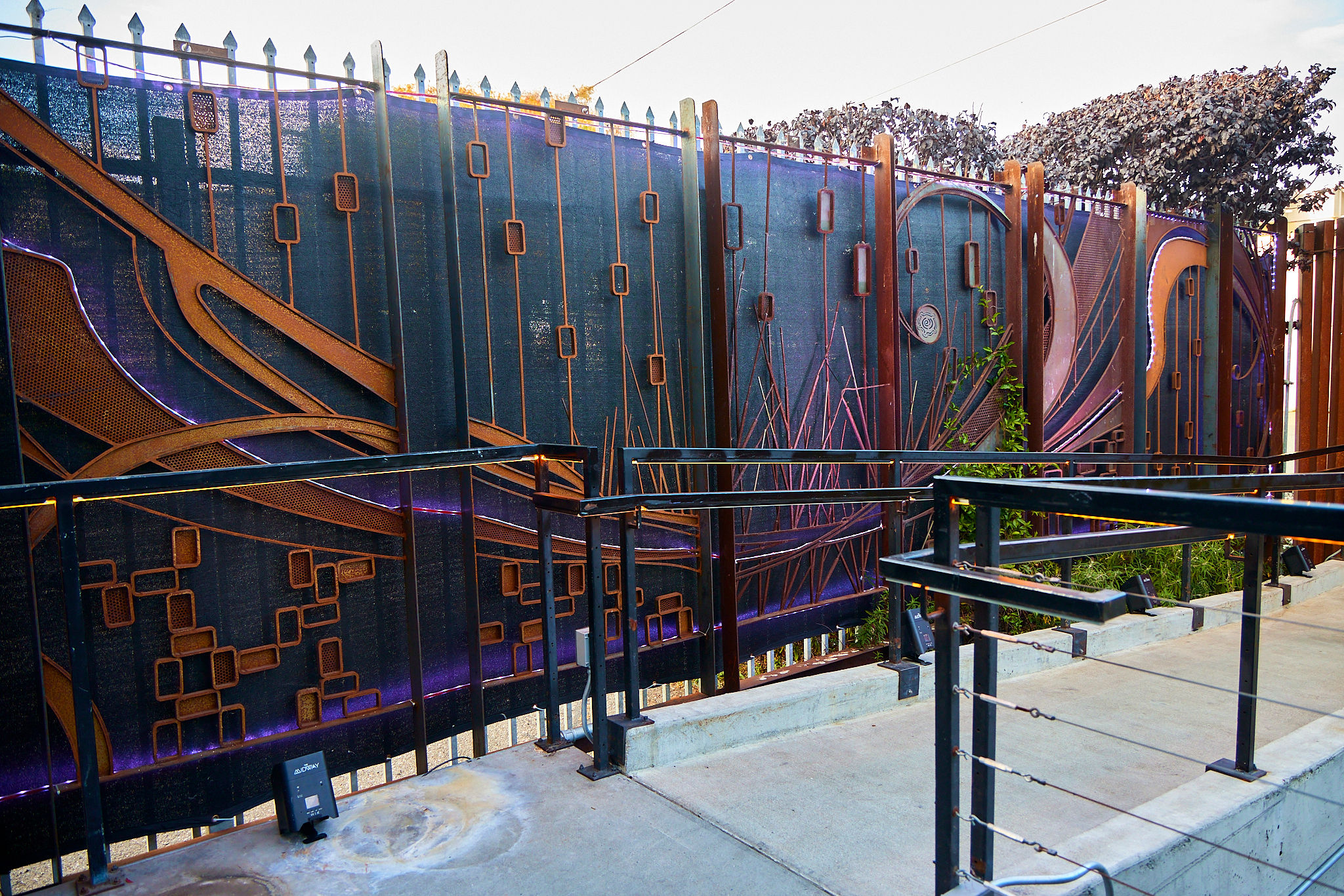
The artists who had made the space at 18th and Bryant streets their safe haven since 1996 hauled out their supplies, equipment and art pieces. All that was left at the end of their slow goodbye was a massive metal installation: A set of eight 10-foot-tall panels covering the facade of the warehouse.

Jane Verma, one of the creators of the piece, calls it a “metal mural.” She said it was important to her that it didn’t gather dust in a storage container because of what it represented.
“Because it was on the facade, it was a signal to anyone walking by that there was something interesting going on here,” said Verma. The metal mural on the former CELLspace building facade. Photo courtesy of Jane Verma.
That warehouse at 2050 Bryant St. was called CELLspace (the prefix stood for Collectively Explorative Learning Labs), and it embodied a dream that’s been dying in San Francisco, said CELLspace co-founder Jonathan Youtt.
CELLspace, he said, was “an open call to anyone and everyone that wanted to come together to create a spot where all arts could exist under one roof.”
In its heyday, the warehouse was a place of boundless creativity. Former CELLspace artists speak of the building reverently. The front entrance led into a gallery before opening up into a 4,000-square-foot main hall. High ceilings and a main stage for performances made it like a “cathedral” for Youtt.
In this grand warehouse, anything could be brought to fruition. More than 50 artists paid a monthly fee of around $75 for unlimited access to glassblowing, sewing machines, metalworking, a wood shop and an audio-visual studio.
Nestled amid studio spaces and machinery was a community kitchen, and a few CELLspace employees rented space to live in the warehouse, in a small loft soundproofed against the din of the active makerspace.
But rather than a siloed artist community, CELLspace was intricately embedded in the community. The warehouse hosted everything from an after-school program to raves. It served as neutral ground between rival Mission gangs, and hosted weekly roller-skating and B-boy/B-girl events.
A popular event could easily draw 500 people, said Youtt.
But it couldn’t last. When he moved to San Francisco in 1992, Youtt’s monthly rent was around $300, which he made in less than a week, freeing up time for art.
By 2012, the CELLspace model, with low monthly fees and daring projects, was too expensive. They couldn’t renew their lease.
Elliott C. Nathan is the gallery director at The Midway, a venue for live music and art exhibitions near Cesar Chavez and Illinois.
He is responsible for organizing the Midway’s CELLspace gallery, a collection of more than 20 items from former CELLspace artists. He knows first-hand how difficult being an artist in the city is.
“You have to really want it, show up to do the work and be lucky — all together,” he said.
“You know, let me add one more on top of that: Be fucking nice as hell,” said Nathan. Although still possible, being an artist in the city now means making connections, working relentlessly and getting lucky.
In 2016, Mission Local documented the process of taking the metal mural being taken down and placed in a truck.
It was moved to The Midway, chosen because it had a similar mission to CELLspace and promised to get the mural displayed in short order — until the eight panels were left outside during renovations, and four of them were stolen. Verma suspected they were taken for their valuable copper.
It wasn’t until earlier this year that The Midway hired metalworkers to rebuild the missing panels.
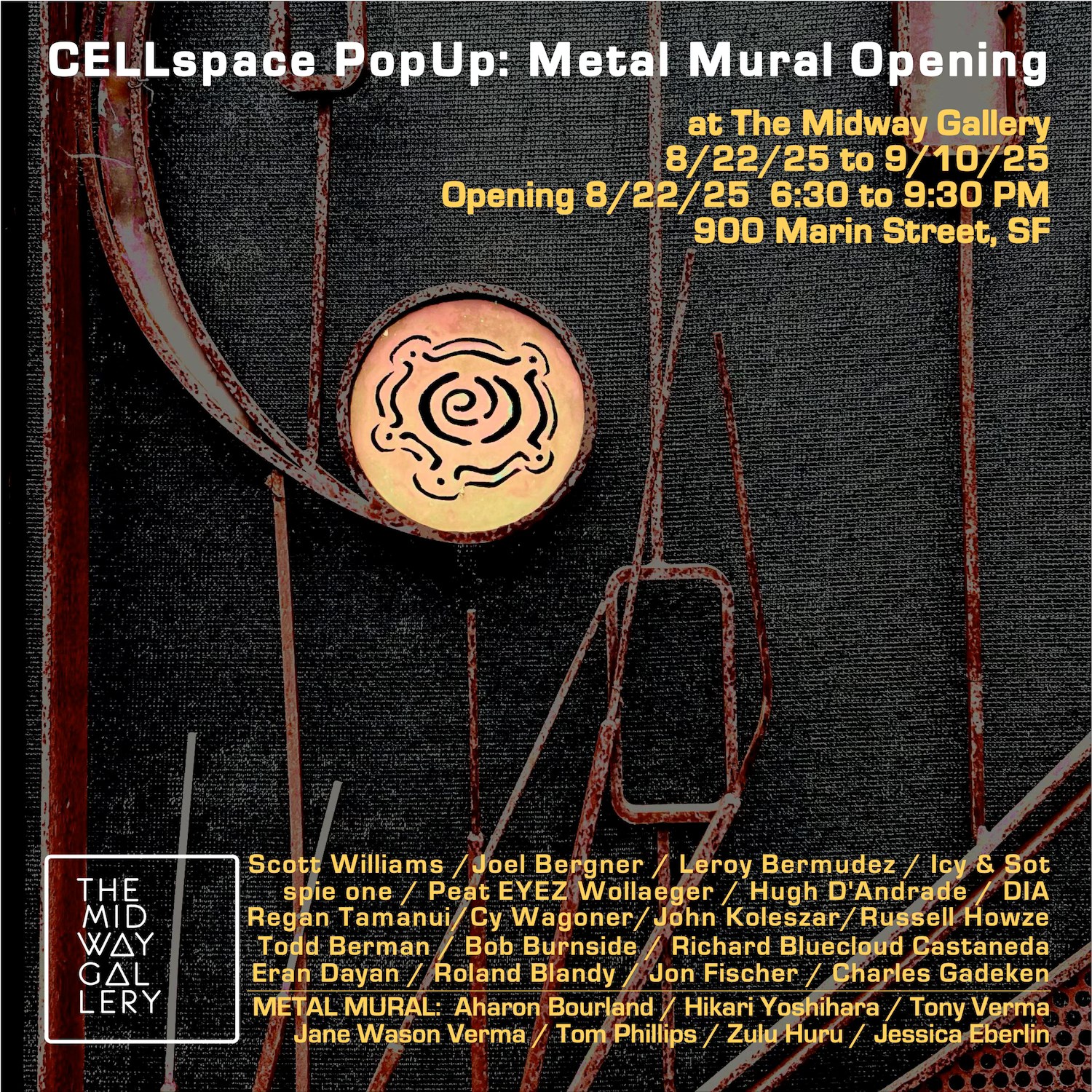
On Friday, the complete metal mural’s now-permanent residence was unveiled at The Midway at an event that also celebrated the opening of a two-week exhibit celebrating CELLspace.
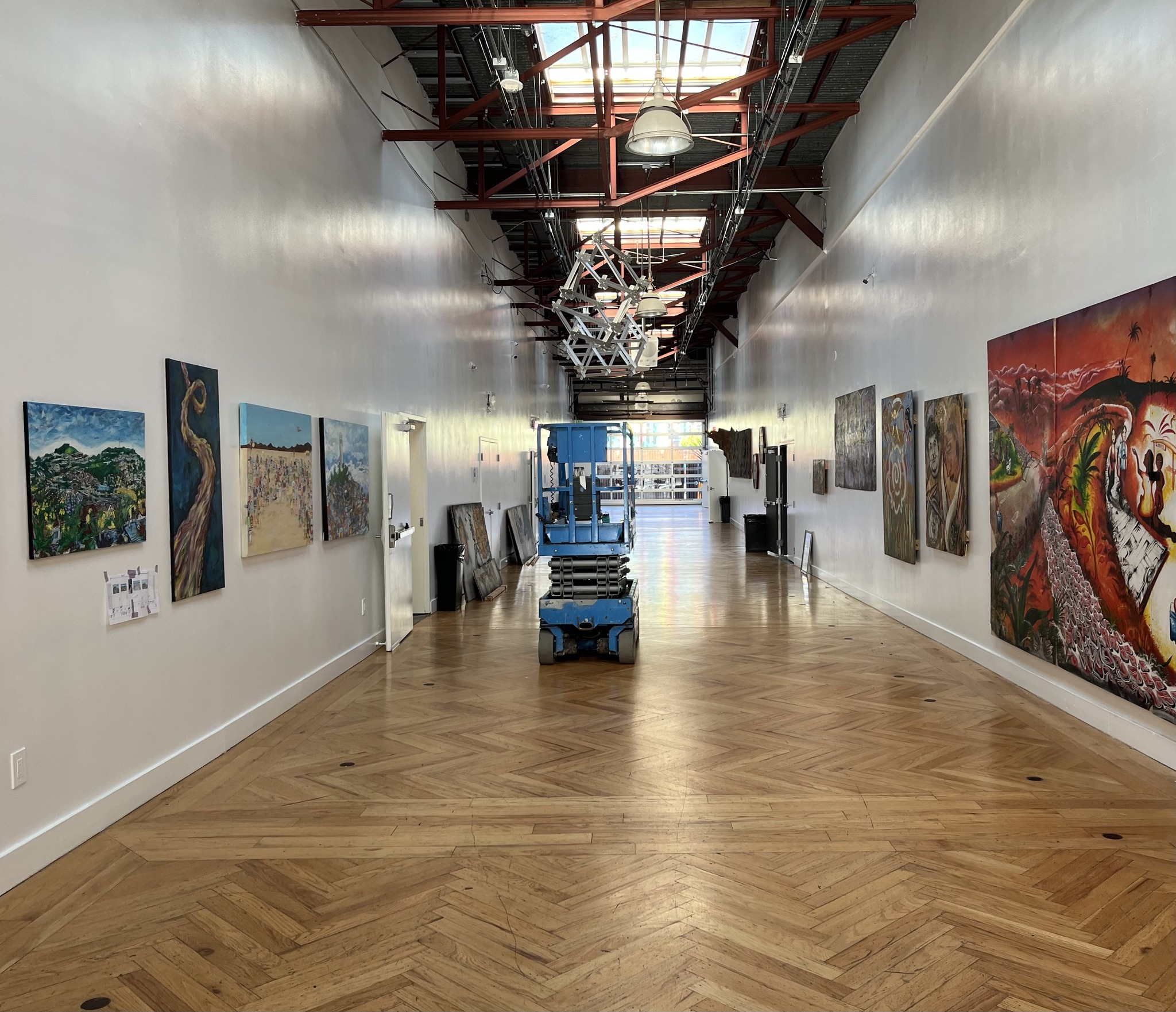
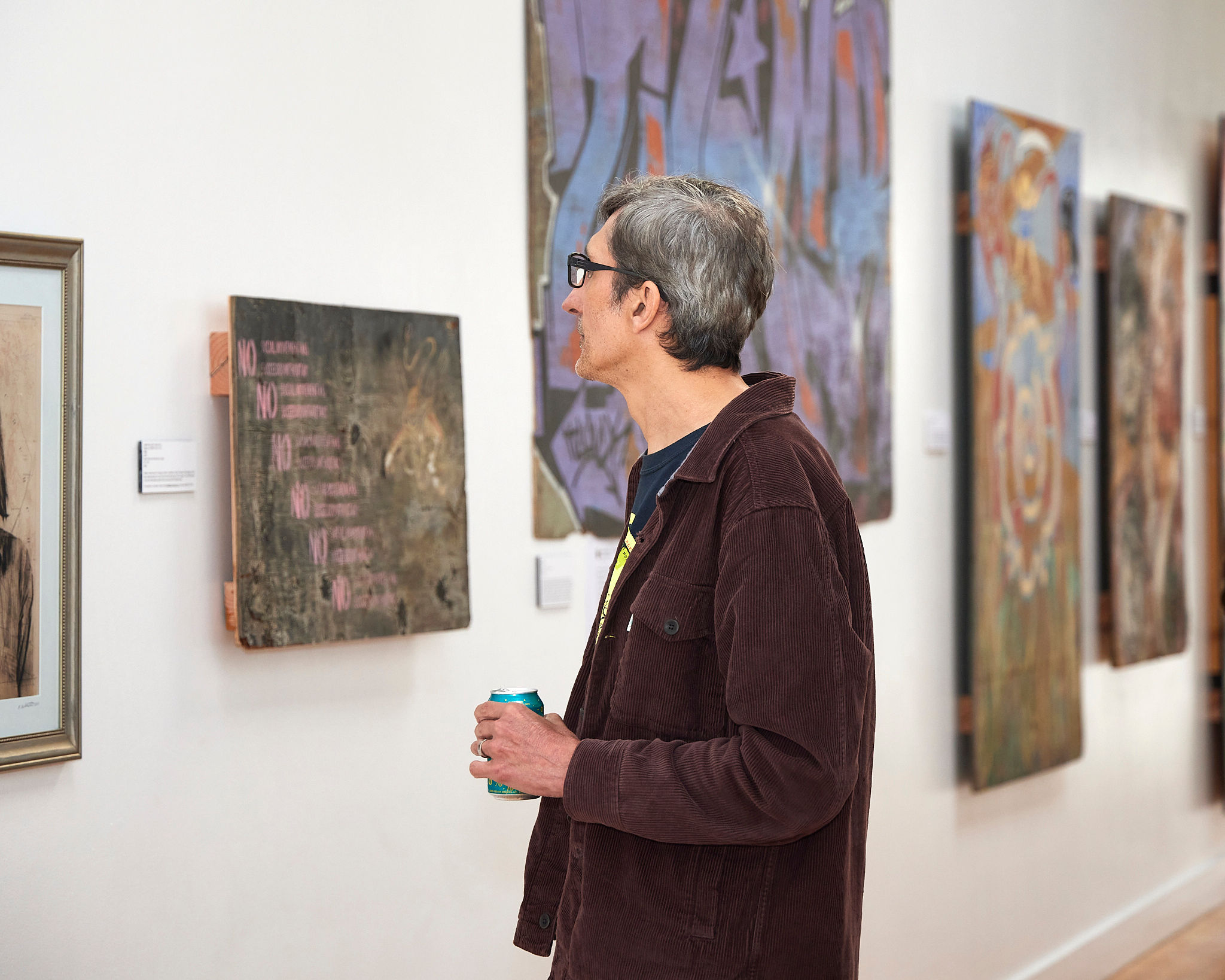
The gallery included a diverse array of works from CELLspace artists: Metal sculptures, wooden hanging spirals, a massive three-dimensional wave made out of reclaimed fencing, graffiti and acrylic paintings on canvas filled the gallery’s narrow hallway.
Many of these pieces were once displayed at CELLspace, while others were made in the years since its demise.
Youtt, standing in the middle of the bustling gallery on opening night, said that out of the dozens of people in the gallery at that moment, he knew about five. To him, it was an incredible success to be able to reach people never involved with CELLspace. He hopes to keep the spirit of CELLspace alive.
Former CELLspace artists — and friends they dragged along — filled the gallery, reliving the glory days. It was “when creativity mattered more than paying rent,” recalled puppeteer Russell Howze.
CELLspace may be gone, replaced first by market-rate housing dubbed the “Beast on Bryant” and then by the affordable housing Mission activists fought for but, thanks to advocacy from former CELLspace leaders, a small part of the development is still carved out for the arts with a Carnaval arts space.
Next year will be the 30th anniversary of CELLspace and, according to Youtt, the perfect opportunity to bring everyone back together for an event befitting of CELLspace, promising art, entertainment and live events.
There may never be a place like CELLspace again, Verma, Youtt and Howze shared. But that won’t stop them from being excited about the potential in San Francisco today.
“I think that creativity is still there, or it can still be found. [You] just gotta search for it a bit,” said Verma.